


I was five years old when my dad introduced me to Star Trek.
Growing up in the 1970s, we had one television. It sat inside one of those big wooden console cabinets with family photos on top, a basket for keys, and enough wood veneer to survive a nuclear blast. That was the living room. A sofa. A loveseat. Dad’s recliner. My mom’s tall wicker chair that seemed to be in every house back then.
Mom had no interest in Star Trek. That was our thing.
Some nights Dad would order pizza. If we were lucky, he would make his dark chocolate brownies afterward. He was not much of a cook, but somehow he had those figured out. Then the opening music would start.
Before the episode got going, Dad would explain the crew to me. Kirk. Spock. McCoy. Scotty. Uhura. Sulu. Chekov. He talked about them like I was about to meet people he already knew.
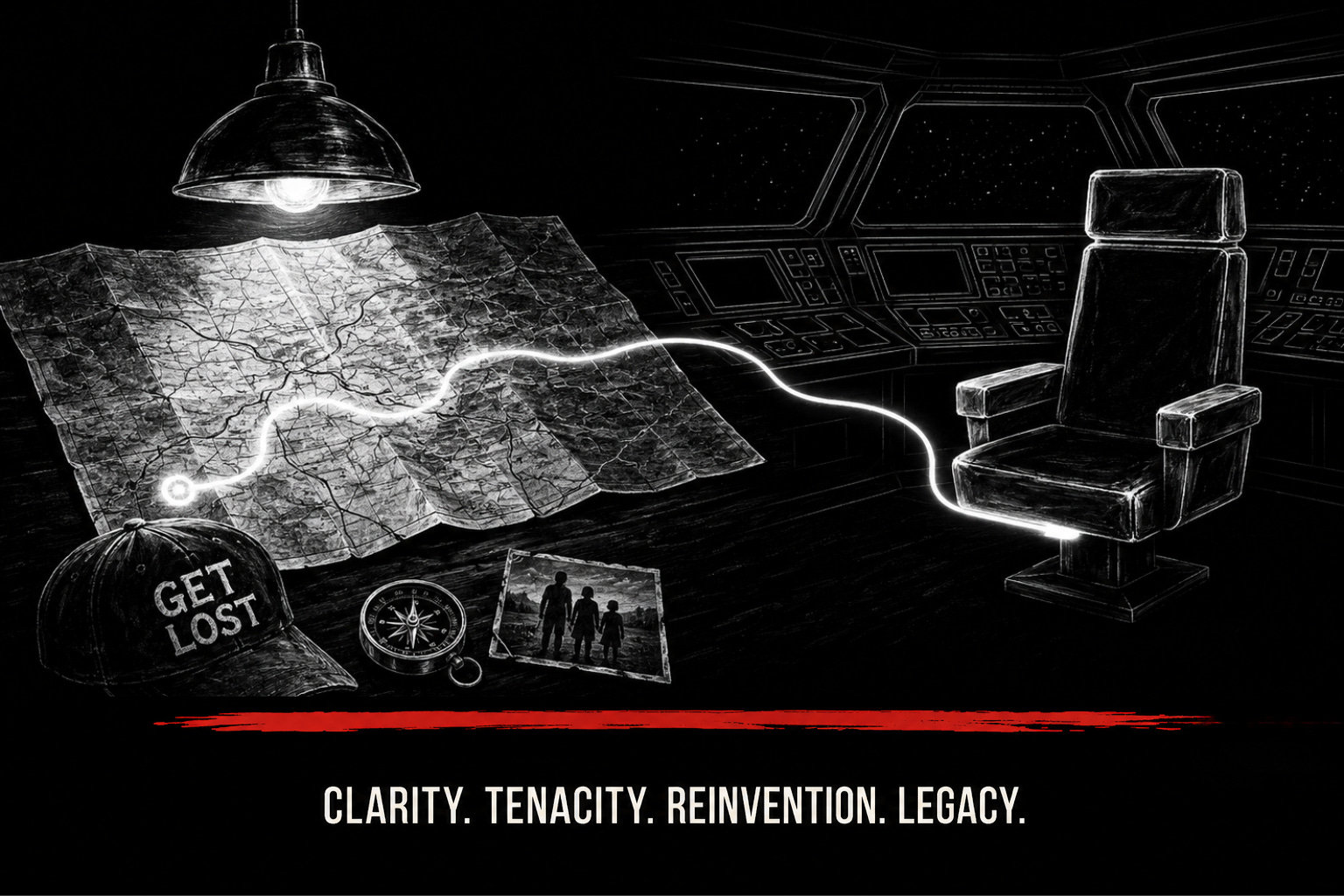
As a kid, I wanted to be Kirk. Of course I did. He was the captain. He got to sit in the chair and make the big decisions.
Dad liked Kirk too, but he had a special appreciation for Spock. He liked the logic. The calm. The way Spock never seemed rattled. We would flash the Vulcan salute at each other from across the room.
Live long and prosper.
I still think of Dad whenever I see it.
He also laughed every time William Shatner got overly dramatic. The more Shatner leaned into it, the harder Dad laughed. At some point, The Trouble with Tribbles became our episode.
I was five. Fuzzy creatures multiplying all over the Enterprise was about the funniest thing I had ever seen. Dad laughed right along with me. We watched that one a lot.
For years, I thought what Dad gave me was a love of Star Trek. That was only part of it.
Dad loved science fiction. He loved maps. He loved road trips.
His favorite baseball cap said, “Get Lost.”
One of his favorite things to do was take a Sunday drive. We would get in the car with no destination in mind and see where we ended up.
After Dad died, my uncle told me he had ridden his Harley all over the country when he was younger. I never knew that. It also sounded exactly like him.
When Star Trek II: The Wrath of Khan came out, Dad did not just take me to the movie. The night before, over dinner, he reminded me who Khan was from the original television episode. He explained enough so I would understand why the movie mattered.
By the time we sat down in the theater, the adventure had already begun.
He did the same thing with road trips.
My grandfather loved maps and traveling. Dad got both from him.
One year, before my wife and I took our kids to Michigan, Dad came over the night before we left. He spread paper maps across the table and showed me the route. The Mystery Spot. Castle Rock. Mackinac Island. The locks at Sault Ste. Marie. And the Cut River Bridge, where the steel deck vibrates under your feet when the semis pass.
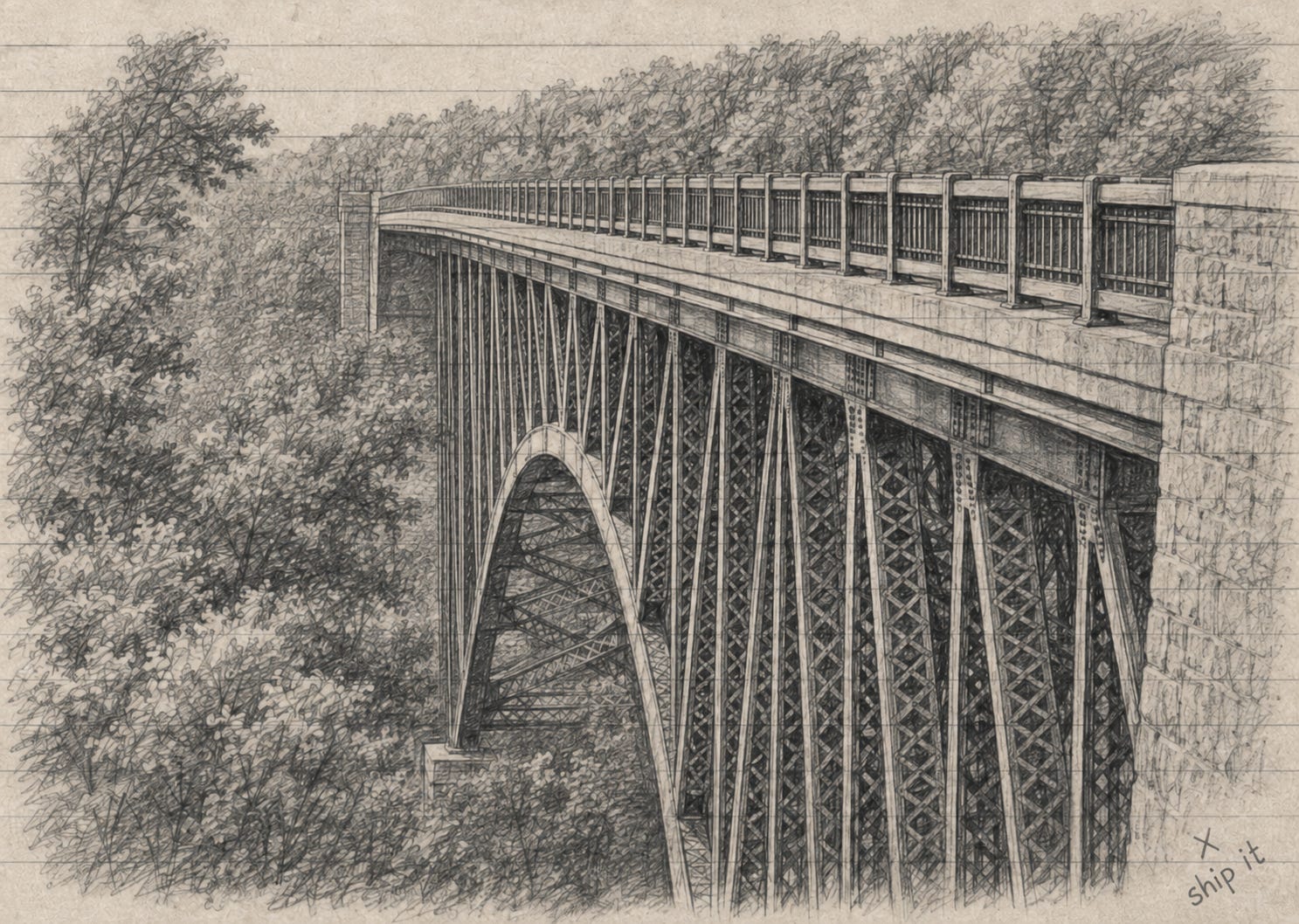
My grandfather had taken Dad to those places when he was a kid. Dad took us when we were kids. Then I took our kids.
Last year, my wife and I took our grandchildren along those same roads.
Five generations traveling the same route.
Somehow, while I was learning how to keep things moving, I stopped thinking as much about where I was going. I became the person making sure the ship kept moving.
That happened slowly.
I started in tech. Then operations. Then sales. Different roles, but the same basic job kept following me.
When something broke, I figured it out. When a client was angry, I took the call. When a system failed, a deadline slipped, or a problem landed between departments, I was usually the person expected to keep it from getting worse.
I got good at it. Not flashy good. Useful good.
The kind of good that makes people trust you with the next problem before you have finished solving the last one.
As we started building the restaurant side of the business, one of our first major wins was a busy fine dining restaurant on the water.
The job was to replace the hardware, upgrade the software, and convert the databases. We did as much of the work off-site as we could. The rest had to happen the morning of the upgrade.
I was about twenty minutes away when the call came.
The software upgrade had gone sideways. Some of the databases were corrupted, and the restaurant was less than thirty minutes from opening for lunch.
I arrived expecting to meet the staff and congratulate our technician on a clean installation. Instead, I found the general manager hovering over him, breathing down his neck and losing his cool.
So I pulled him away.
We walked outside along the dock while I tried to calm him down and give our technician room to work. The system stayed down for about the first forty-five minutes of lunch.
After everything settled, the general manager pulled me aside. He told me we had done a great job. What he appreciated most was that everyone on our side had kept a cool head, even when he had not.
That became the job more often than I realized.
Keep the technician working. Keep the client from boiling over. Keep the restaurant moving.
Keep the ship running.
For years, I thought that was leadership. Maybe some of it was.
But looking back, I had become Scotty.
Not the captain choosing the destination. The guy below deck keeping the engines from blowing apart.
Being Scotty came with rewards. People trusted me.
They called when things were messy. They handed me the problems nobody else wanted. They knew I would stay calm, sort through the noise, and get everyone to the other side.
That kind of usefulness becomes part of your identity. You start to believe your value is tied to how much pressure you can absorb.
So you take the call. You stay late. You step into the middle. You fix what should have been prevented.
And because you keep pulling it off, nothing around you has to change. The ship keeps moving. So do you.
For a long time, I did not question any of it. Being needed felt a lot like having purpose.
It took me years to notice the difference.
Purpose asks something of you. Being needed just keeps asking.
The better I became at holding everything together, the harder it was to imagine stepping away. I knew where the weak spots were. I knew which people needed cover. I knew what would probably happen if I stopped catching things before they hit the floor.
That is the strange part about being dependable. Nobody tells you when you have done enough. They just keep trusting you with more.
By then, I was no longer asking where the ship was going. I was too busy making sure it got through another day.
Years later, I introduced my grandson to Star Trek.
The same opening music. The same crew.
Kirk. Spock. McCoy. Scotty.
I found myself doing what Dad had done with me. Explaining who everyone was before the episode really got going. Pointing out the little things. Waiting to see which character he noticed first.
He liked the action, of course. But I found myself watching Scotty.
Not because he was the loudest person on the ship. He usually was not.
He was the one people called when something was failing. The engines. The power. The systems nobody thought about until they stopped working.
And somehow, Scotty always found a little more. A few more minutes. A little more power. One more way to keep the Enterprise moving.
Watching it with my grandson, I started seeing the character differently.
As a kid, I wanted to be Kirk.
Somewhere along the way, I became Scotty.
The realization did not make me stop being Scotty.
I am still the person who notices when something is about to fail. I still step in. I still want to protect the people doing the work. That part of me is not going anywhere.
But I have started asking a question I ignored for a long time.
Where is this ship actually going?
Keeping something running is not the same as believing in the destination. You can be good at the work and still know the work is taking you somewhere you no longer want to go.
That was harder for me to admit than I expected.
Being dependable had served me well. It built a career. It helped support a family. It gave people a reason to trust me.
But at some point, usefulness became the whole assignment.
Dad never seemed interested in staying in one place just because he knew how to get there. He followed maps. Took Sunday drives. Rode his Harley across the country. Showed me the route, then trusted me to keep going.
Maybe that is what I missed all those years.
I still think of Dad whenever I hear the opening music.
The living room. The wooden television cabinet. Pizza on the table. Brownies if we were lucky.
Kirk in the chair. Spock standing beside him. Scotty somewhere below deck, keeping everything together.
Dad gave me all of it. The stories. The maps. The need to know what was over the next hill.
For a long time, I thought the lesson was to keep the ship running.
I am still good at that.
Maybe too good.
The harder question is whether I know when to stop fixing the engines long enough to decide where I want to go.
I do not have that answer yet.
But at least now I know that is the question.
—
Thanks for reading.
~ JP
CTRL:C
—
Related:
The cost of becoming the person everyone depends on.

Because keeping it running isn't the only job anymore.
CTRL Signals by JP Bristol
Clarity. Tenacity. Reinvention. Legacy
Lovely…enjoyed reading this very much!
This is great, JP! I really like how you wove together memories of your dad, Star Trek, and your own journey. My mom loved Star Trek, and I remember watching the original series with her often as a child. I love how simple moments can stay with us for a lifetime.