


Nothing Was Wrong. That Was the Problem.
I still had the job. The title. The paycheck. The meetings where people nodded when I spoke.
On paper, everything worked.
But something shifted anyway.
Sunday nights got heavier. Not dread, pressure. Like pulling on a jacket that still fit but no longer felt like mine.
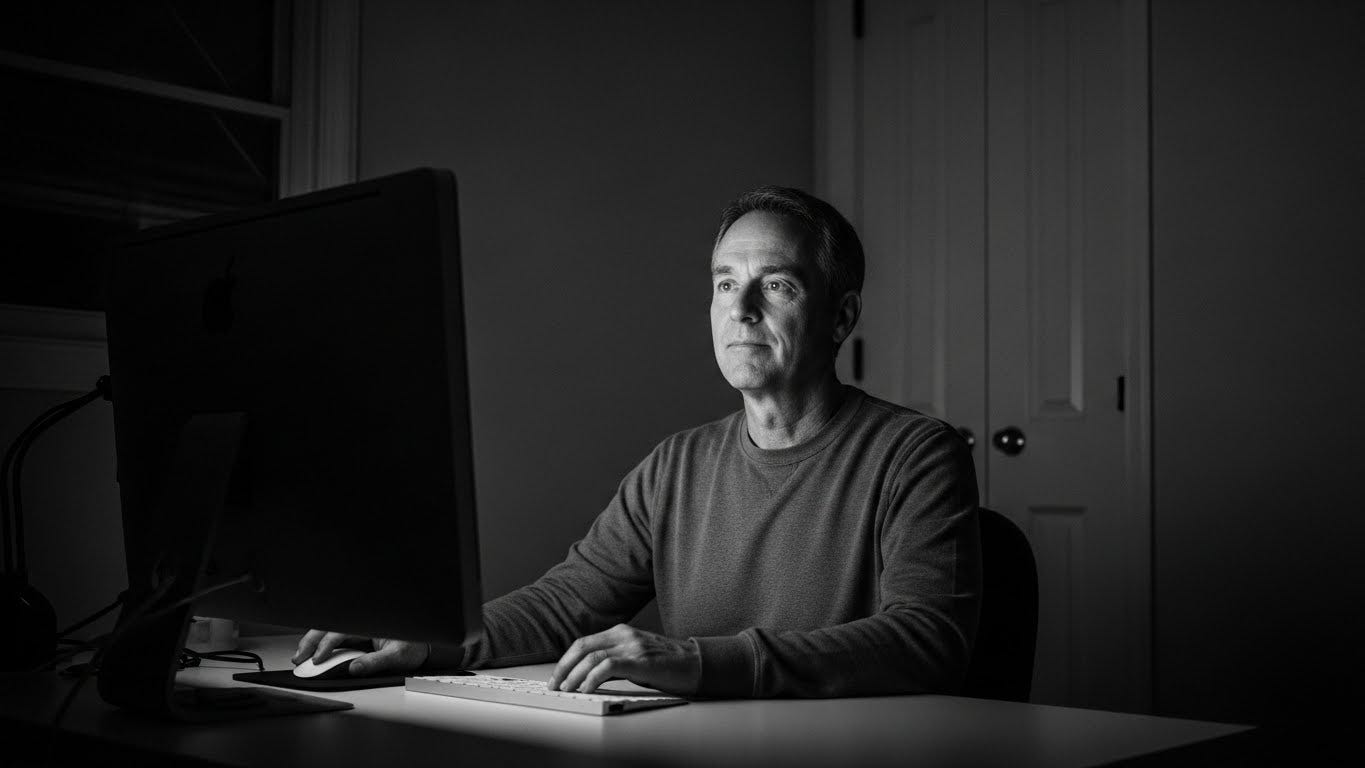
After full days of meetings, I would sit at my desk, screen glowing, house quiet, and feel a dull certainty I could not logic away.
Not panic. Not burnout.
Stagnation.
I told myself to be grateful. I was. I told myself this was normal. Maybe it was.
But the question kept showing up.
Is this it?
Nothing was wrong. That was the problem.
The First Act Runs on Rules
The first half of life runs on rules.
Work hard. Be reliable. Stay patient. Earn trust.
Climb carefully.
I followed them.
They built stability. They paid mortgages. They raised a family.
Those rules did their job.
But no one tells you what happens next.
The rules that build security are terrible at building meaning once the clock becomes visible. Progress turns into repetition. Endurance turns into erosion.
You keep doing the right things. They just stop moving you forward.
The rules do not fail loudly. They quietly expire.
The Quiet Fear
Leaving is scary. Staying is scarier.
Because staying asks you to accept something final, that this might be the version of you that reaches the end.
I was not miserable. I was competent. Trusted. Paid.
Which made the discomfort harder to justify.
Who walks away from “fine”?
So I stayed quiet.
I did what most people do at this stage. I performed during the day and questioned everything at night.
I started building in private, writing, learning, documenting. Not because I had a plan, but because I needed proof I was still capable of growth.
And there it was, the real fear.
Not failure. Not starting over.
Wasting what was left by pretending the old rules still applied.
The Moment It Became Impossible to Ignore
It happened on an ordinary weekday.
A meeting I had run dozens of times before. Same agenda, same faces, same rhythm.
I knew exactly when to speak, when to nod, when the conversation would circle back to a decision already made.
While someone else was talking, I caught myself doing the math.
Not revenue. Not timelines.
Years.
How many more of these meetings were left. How many more times I would say the right thing and feel nothing afterward.
My camera was on. My posture was good. I looked engaged.
Inside, I felt detached, almost hollow.
I remember thinking, clearly and without drama:
I am good at this. And I am done growing here.
That thought scared me. Not because it was reckless, but because it was calm.
No anger. No exit fantasy. Just a quiet recognition that this room no longer asked anything new of me.
When the meeting ended, everyone signed off. I stayed seated, staring at my own reflection in the dark screen.
That was the shift.
Not a crisis. A verdict.
That meeting did not make me reckless. It made me honest.
I did not need a dramatic exit. I needed different rules.
Second Acts Change the Rules
First acts reward patience.
Second acts punish it.
First acts reward endurance.
Second acts reward leverage.
First acts ask, “Can you last?”
Second acts ask, “Is this worth the time you have left?”
The rules that help you survive the climb are optimized for approval, stability, and staying in bounds. Second acts are not.
Second acts reward movement before certainty, proof before permission, ownership before optimization.
You stop asking how to advance inside the system. You start asking whether the system deserves more of you.
That change feels irresponsible at first, especially if you built your life on being dependable.
But responsibility changes when time becomes visible.
Playing by first-act rules in a second act does not make you disciplined.
It makes you stuck.
Where People Misread Reinvention
Most people do not fail at reinvention. They misdiagnose it.
They feel the tension and reach for the wrong fixes.
They rebuild the same life with a new title. Same structure. Same pace. Same dependency on approval. Just a shinier label.
They chase relevance instead of resonance. Younger. Faster. Louder. Trying to keep up with people playing a different game on a different clock.
They optimize endlessly. New tools. New systems. New dashboards. Perfect setups that delay the one thing that matters.
Shipping.
Optimization feels productive. Most of the time, it is avoidance.
For me, it looked like endless setup.
Dashboards dialed in. Workflows tidy.
Nothing shipped. Nothing tested. Nothing real.
They wait for certainty. Waiting until the plan is airtight. Waiting until confidence shows up. Waiting until someone says, “Yes, now.”
Second acts do not reward waiting. They reward feedback.
And many try to make the second act invisible.
Building quietly. Hiding the learning curve. Avoiding the awkward phase so no one questions their competence.
That silence is costly.
Second acts are built in motion, not in hiding.
What I Actually Did
I did not quit. I did not announce a pivot. I did not blow up a stable life to feel brave.
I started smaller.
I wrote when no one was asking for it, not to build an audience but to test my voice.
I learned tools that made me uncomfortable, not to be technical but to avoid becoming obsolete.
I documented instead of waiting until I was “ready”. Messy notes, rough drafts, half-formed ideas shipped anyway.
I stopped asking whether something would work long term. I asked whether it gave me energy this week.
Some things flopped. Some surprised me.
None of them required permission.
Movement did more to quiet the anxiety than thinking ever did. Clarity followed action, not the other way around.
I was not building an escape plan.
I was building proof.
When Time Stops Being Abstract
There is a moment in your fifties when time stops being theoretical.
You stop saying “eventually”. You start saying “how many more”.
Not in panic. In math.
How many more years you will feel sharp enough to learn fast. How many more chances you have to build from scratch. How many more times you want to trade your best hours for work that no longer stretches you.
The clock does not rush you. It just keeps count.
It sharpens your choices.
The Question That Ends the First Act
Second acts do not announce themselves.
They start when you stop pretending the old rules still apply. Not because you are unhappy, but because you are done negotiating with time.
You do not need permission to start differently. You do not need certainty to move. You do not need to burn everything down to tell the truth.
You just need to stop playing a game that no longer rewards you.
Most people never do.
They stay impressive. They stay busy. They stay safe.
And they quietly run out the clock.
Second acts belong to people willing to notice the moment when competence turns into containment and choose movement anyway.
So here is the question worth sitting with.
Which first-act rule are you still obeying that is quietly sabotaging your second?
And what would change if you stopped today?
—
Thanks for reading.
~ JP
CTRL: R
CTRL by JP Bristol
Clarity. Tenacity. Reinvention. Legacy.
It’s just a great feeling reading someone’s writing when so much of it touched on your own life. We have had a similar experience. And we’re doing something about it. So many don’t, but your words here could help them.
What would change? I’d be free to count my own time and how I want to impact the world.