


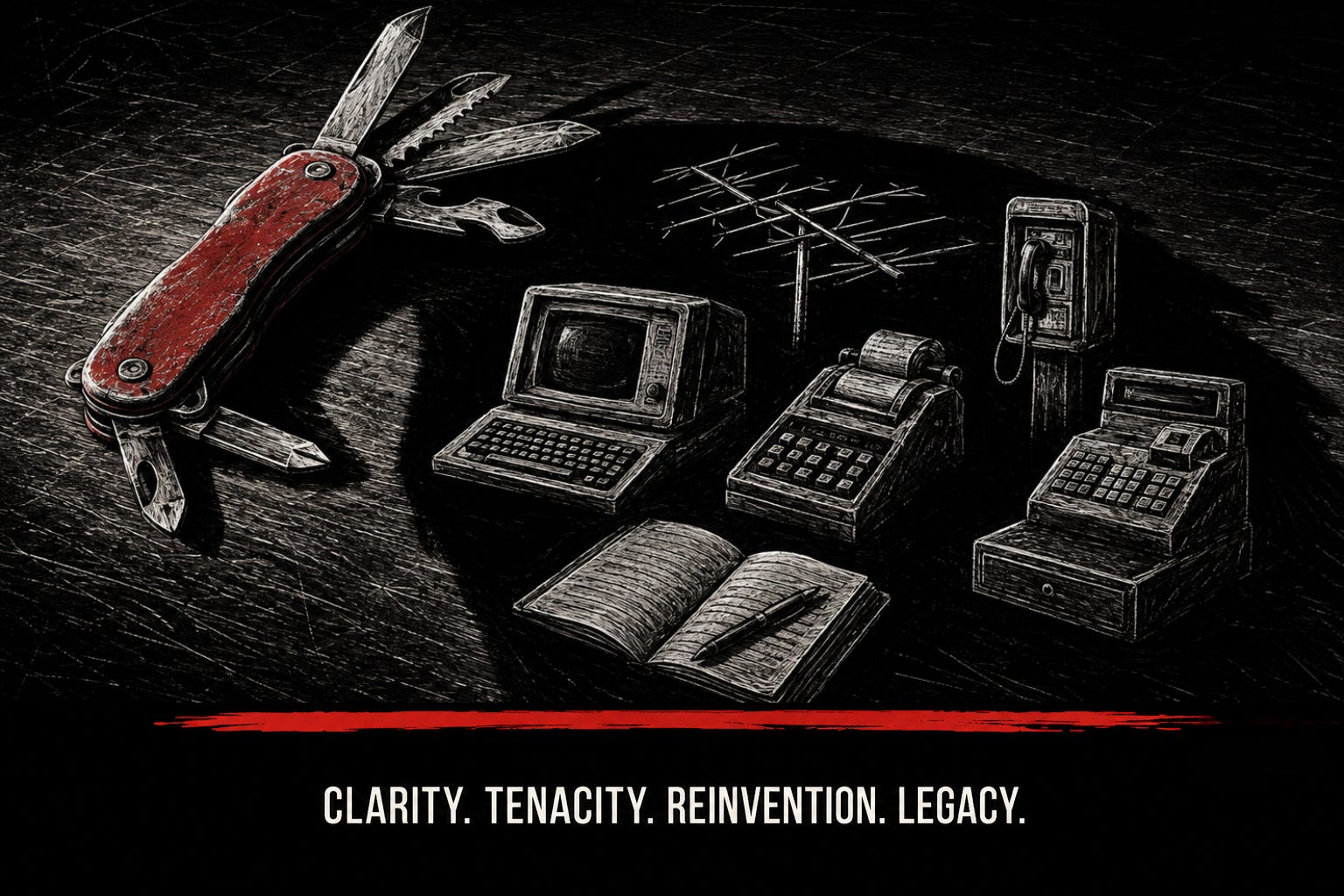
My grandfather carried a Swiss Army knife for years and used every freaking part of it. The little scissors. The tiny screwdriver for his glasses. The knife. The file. Whatever the problem was, he usually had something in his pocket that could handle it.
I still have one of his knives. He gave it to me shortly before he died, and it’s one of those things I will cherish forever.
I was driving to an appointment when I started thinking about that knife. I had the meeting on my mind, what I needed to say, what I needed to know, and where some of that knowledge had even come from.
That’s when the knife came back to me.
Not as a keepsake.
As a pretty good description of what had happened to me over the years.
My dad and both of my grandfathers were tinkerers. They loved figuring out how things worked, taking things apart and putting them back together again. Sometimes with parts left over, sometimes not, but they usually got it working.
When something around our house broke, my dad’s first reaction was to try to fix it. He wasn’t much of an instruction manual type of guy. He would grab a screwdriver or a pair of pliers, whatever tool he figured he needed, and start taking it apart trying to figure out what was wrong.
When I was young, it wasn’t totally apparent to me, but we didn’t have much money. So it was probably partly my dad’s can-do, I’m-going-to-fix-it mentality combined with the fact that we just didn’t have a lot of money to call somebody.
When I was about 12, my best friend and I decided we were going to start mowing our neighbors’ lawns. Actually, I take that back. What started it was somebody had put a lawnmower out at the street for trash pickup, and we grabbed it.
It wouldn’t start. My best friend was almost two years older than me and seemed to know a lot more about engines than I did, so we figured we could fix it.
We pulled the carburetor and found this tacky residue inside. He said the gasoline had probably sat too long and gummed everything up. He went home, grabbed a can of carburetor cleaner, and we spent most of Saturday cleaning out the gas tank, fuel lines, and carburetor.
In the end, the mower was running.
That’s when J&S Lawn Care started.
We decided five dollars was probably about right for the smaller yards.
A year or so before that, I had started messing around with BASIC programs on my grandfather’s TRS-80.
I used to get a monthly magazine with games and different programs you could type in yourself. And I mean type in yourself. Line by line. Sometimes for hours.
Then you’d try to run it and something wouldn’t work. Maybe you had a typo. Maybe your version of BASIC didn’t like something in the code. Then you had to go back through it and figure out where you screwed up.
Sometimes we never got the program to work.
A lot of times we did.
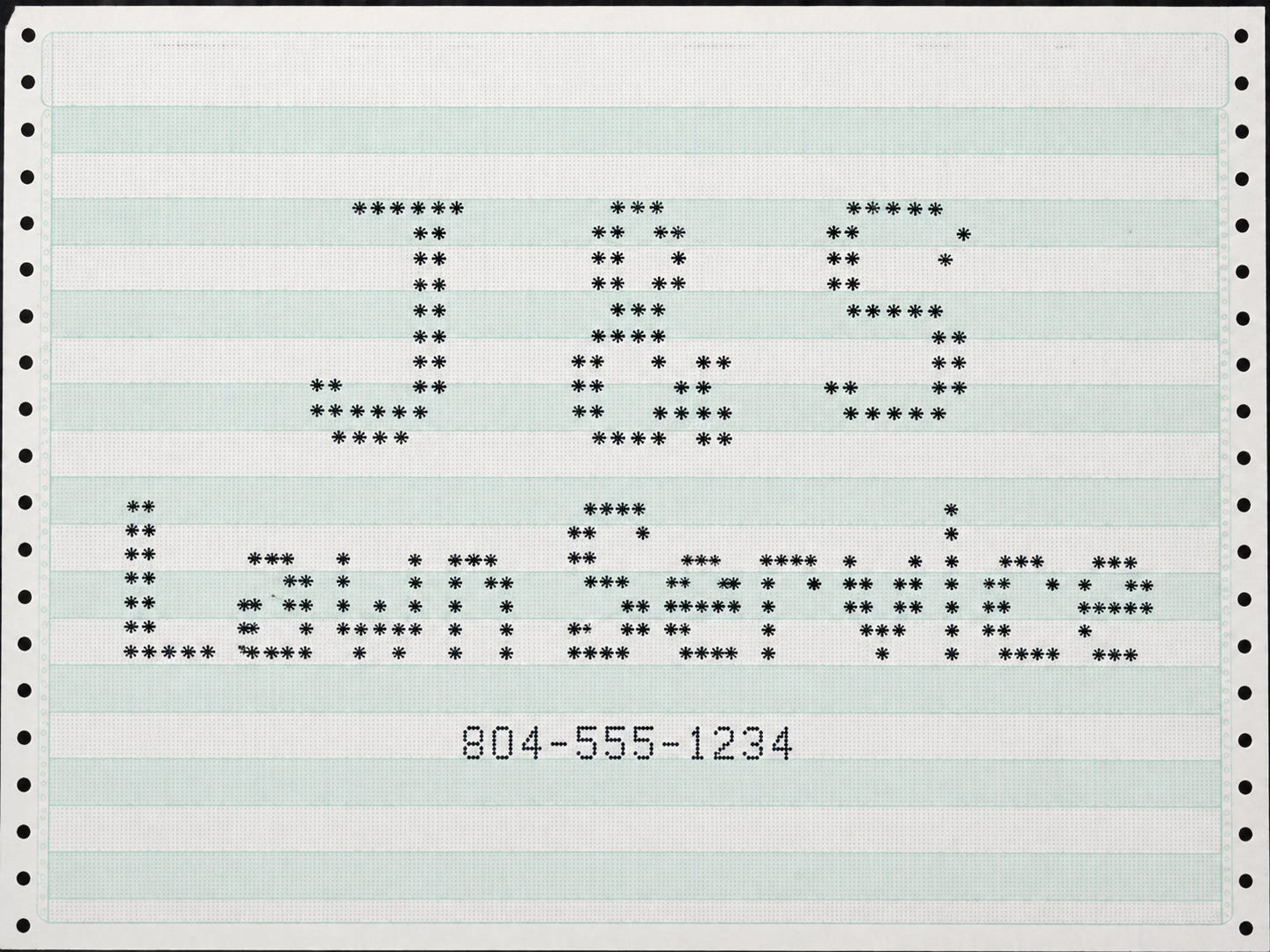
One issue showed how to make large letters out of asterisks. We took that idea, changed it around, and printed the J&S Lawn Care flyers on my grandfather’s green-and-white tractor-feed paper.
I sort of remember finding a stack of those flyers in the attic when I moved out of my parents’ house. I folded the whole thing in half and threw it away. I wish I hadn’t done that.
If you’re figuring out what still works and what comes next, subscribe for the next CTRL Signal.
Learning to Figure Things Out
My first Sunday on call came about a few months after I started with the grocery store chain.
The other technicians had warned me what it could be like, but around 5:30 that morning the beeper went off and whatever they had told me did not prepare me for that sound. We called them beepers for a reason. That god-awful noise could wake the dead.
I was trying to drink my coffee and read the newspaper when the first page came in. I had to use the house phone to call the store back, and of course the line was busy.
Then another store paged me.
Then another.
They were all using 911, which meant emergency.
The Sunday sale prices had not downloaded, and the stores opened at 7.
By the time I got off the phone with the first store, another page had come in. Then another.
At that point, I was already getting dressed, pouring another cup of coffee, and heading out the door for the 25-minute drive to the office.
When I walked into the computer room, the modems were squealing. One of the servers had gotten stuck in a loop and was not moving on to the next store.
The fix, at least the first time, was pretty basic. Power it off. Let it sit for about 2 minutes. Turn it back on. Let everything reinitialize.
Then put it back into dial mode and hope it started calling stores again.
Once it started dialing again, you could usually tell if it was working right. You could hear the healthy squeal of the modem connecting, the screen would change and say connecting, and then you could watch the byte counter increasing as the file was being sent.
Originally, I would watch a few stores go down and think everything was good and leave.
Then one Sunday morning I got burned.
I got all the way home, started doing whatever I was going to do with my Sunday, and the beeper started blowing up again. I had to drive 25 minutes back to the office and do the same thing all over again.
After that, I just learned to stick it out until the computers had done their thing.
You learned to ask a lot of questions, and more importantly, you learned to ask good questions.
Was there any evidence the store had lost power last night? Was the computer on when you came in? What was on the screen when you got there? We trained the store people to pay attention to that stuff and jot down notes.
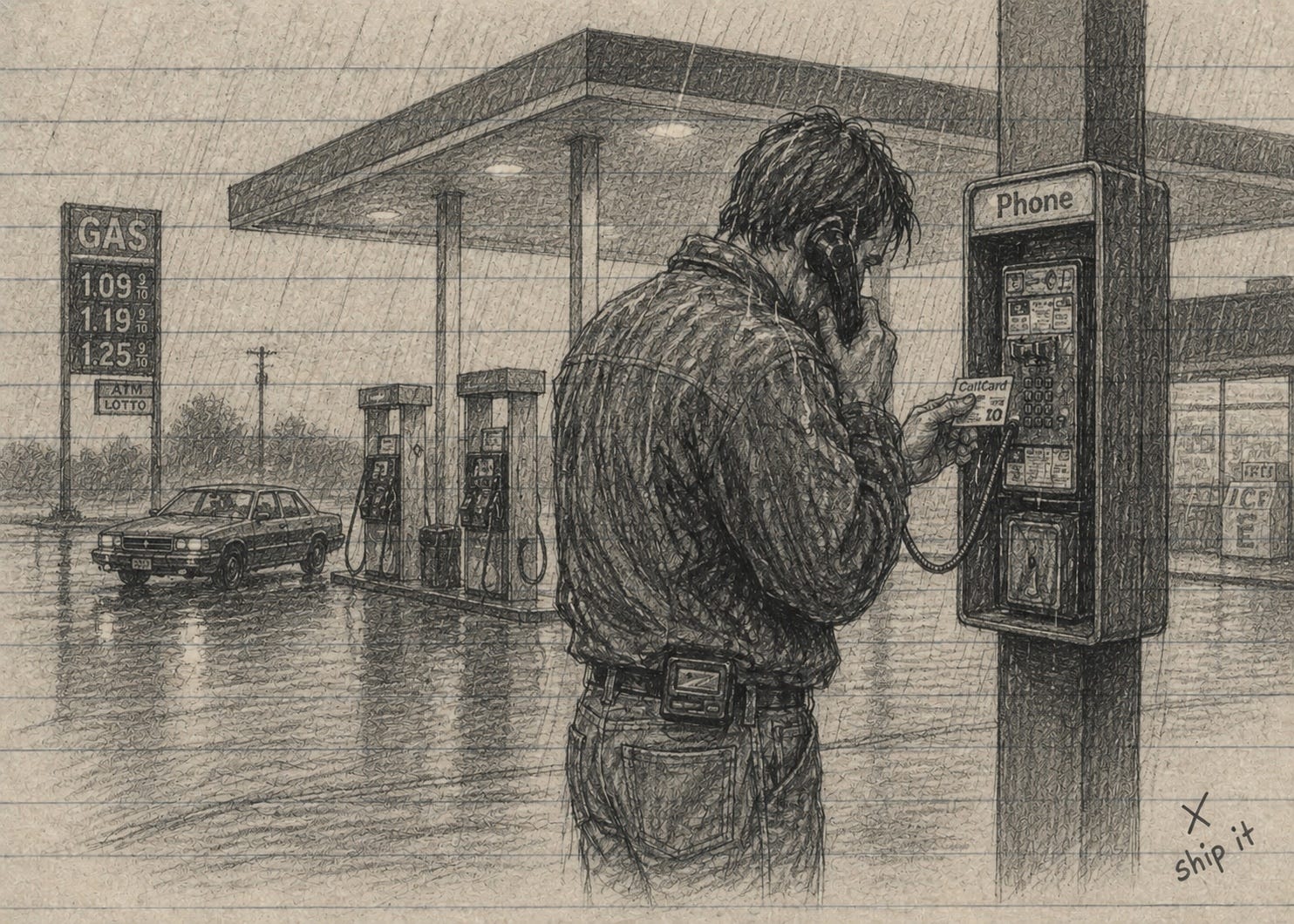
We didn’t have cell phones. If I got the 911 while I was driving, I had to find a payphone. Sometimes that meant standing in the rain trying to call the store back while they were paging me again.
What’s something you learned years ago that still helps you today?
Technology just didn’t work right a lot of the time, so you had to pay attention to what was happening.
If the second page came in, then the third, and you were still on the phone with the first store, you knew it was probably something more system-wide.
Then you had to figure out what kind of problem you were dealing with. Was it one server or both? Did the office lose power? Did the file from the AS/400 make it to the PCs?
A year after I started with the grocery company, I was promoted to department supervisor.
That was when the job started changing in a different way. I was still dealing with computers that would not work, but now there was a human layer sitting on top of it.
I’m not saying computers aren’t complicated, but humans are complicated.
Now I was dealing with scheduling, training, employee problems, and making sure the department ran smoothly. Our group trained store personnel too, so I was also responsible for the people doing that work.
It was the first time I started to realize the job was about more than just keeping the computers going.
By 1995, I was managing the department, which meant hiring too. I hired a young guy who had just graduated from a technical school with an associate degree in computer science.
He interviewed well. Seemed reasonably intelligent. Nice smile. Presented himself professionally.
A few weeks in, though, we started noticing things. He had a really bad temper and could not own anything that went wrong, even when it was clearly just lack of experience.
The whole thing finally came to a head when he literally punted a small Rubbermaid garbage can across the room.
Needless to say, that was his last day.
I remember thinking afterward that maybe I had bitten off more than I could chew.
That incident was one of the things that started growing my relationship with the HR director. We had a lot of after-hours conversations about hiring and people problems, and one of my takeaways was that I needed to ask better questions.
I started giving candidates a scenario almost immediately. An angry store manager freaking out, dropping the F-bomb, calling you incompetent, acting like you were the problem instead of the computer.
Then I’d ask how they would handle it.
I had one guy sitting across the table tell me, “I wouldn’t handle it very well. I don’t take kindly to people yelling and cussing at me.”
That wasn’t a bad answer. It was honest.
Probably not the person I needed answering the phone.
For a short stretch in 1995, I was reporting directly to the CEO.
We had some ancient computers in the stores. A few were IBM XTs. I came up with a plan to replace the motherboards with 386 DX40s. They weren’t bleeding edge either, but they were a huge improvement and a lot cheaper than replacing every computer.
I worked out the cost and the time savings and took the idea to the CEO.
He turned around to his adding machine, punched in some numbers, looked at me over the glasses sitting on the end of his nose and said, “Okay, let’s do it.”
I got excited and kept talking.
He put his hand up.
“Once you sell it, stop talking.”
The Job Kept Getting Bigger
I got into internet marketing in the late ’90s through Allen Says’ Internet Marketing Warriors.
Back then, a lot of internet marketing was built around really long sales pages. You could buy templates and customize them for whatever you were selling. Ebooks were a big thing. We literally sold ebooks about how to sell ebooks about building a business selling ebooks.
I had always liked writing, so that part came more naturally to me.
The community side did not.
Writing about a topic is different than writing a personal message back to somebody. Same thing with blog comments. Building a connection with people took more work for me, especially being an introvert.
A lot of that feels familiar now with Substack and CTRL.
By 2005, I had moved to another company and was promoted to GM.
That was when I got my first real look at the P&L. Employee problems, customer problems, business problems, all of it started looking different when I could actually see the numbers.
Things like overtime became very clear because I could see the effect it had on profitability. Same thing with expenses. For the first time, I could see what those decisions were actually doing to the business.
I also started seeing how increasing revenue could fix a lot of problems.
I didn’t think in those terms when I was the IT manager.
During the financial meltdown in 2008 and 2009, we had to make some tough calls.
By then I understood the P&L well enough to know those decisions didn’t happen in isolation. Cutting staff affects customer service. Customer service has a direct effect on revenue. So you can cut expenses trying to solve one problem and end up creating another one.
Cost cutting can become a downward spiral.
Fortunately, that wasn’t what happened with our company. We survived and ultimately thrived through those years.
But there were plenty of lessons in making decisions where you didn’t always know exactly what the outcome was going to be.
Know someone who’d get something out of this? Send it their way.
Learning to Sell
When we were getting ready to take on the new hospitality POS product, I was leading the charge on the technical side of the house. We had staff meetings with the technicians, figured out roles and after-hours support, and sent key people out of state for hands-on manufacturer training.
We had already taken over the Virginia territory and were visiting the existing customer base, which was hundreds of restaurants spread across the state. We broke into groups, paired up with manufacturer reps and went around introducing ourselves. While we were out there, we were also cold calling new restaurants in the same areas.
We were still very much in ramp-up mode when the person who was going to handle sales had to step away for a medical emergency.
There wasn’t really a conversation about what happened next. I just stepped into the sales role.
When you work in a small technology company, everybody is kind of in sales anyway. I had been in a lot of sales presentations over the years and had done plenty of product demos, but I was never the sales guy.
I could talk about the technology all day. That part didn’t bother me because I knew what I was talking about.
The part I struggled with was asking for the sale.
Back then, POS usually had a pretty long sales process. I was normally involved in the first meeting or the demo, so I had not actually watched the close that many times.
I know I talked too much sometimes. I probably talked myself out of a few sales.
And that was when something the CEO had told me years earlier finally made sense.
“Once you sell it, stop talking.”
About a year after I moved into restaurant sales, I got licensed and started selling life insurance on nights and weekends.
At the time, I looked at insurance as an exit plan. I did not expect what happened next.
Sitting at a family’s kitchen table at nine o’clock at night talking about death and money. “What happens if Bill doesn’t come home tomorrow?” How long can the family keep the house? What happens to the kids?
I wasn’t used to having conversations like that selling technology.
I didn’t realize it then, but I was sharpening my sales skills every day.
Insurance was making me better at my 9-to-5 job.
What Still Works
Over the years I’ve learned a lot of things that I don’t use anymore. Some of that technology is so old now I’m not sure I’d remember what to do with it right away.
I still troubleshoot, ask a lot of questions, and if something doesn’t make sense, I usually stay with it until I figure it out.
I’m 55 now, and I’m still trying to understand what all of that adds up to and what I want to do with it next.
CTRL:R
If this was worth your time, three ways to say so.
Send this to someone who still trusts old skills.
What’s something you learned years ago that still helps you today?
If this helped you see your own next move a little differently, subscribe for the next CTRL Signal.
Thanks for reading.
~ JP
—
On old tools and new problems:

CTRL Signals by JP Bristol
Clarity. Tenacity. Reinvention. Legacy
Mate, I have been so focused on creating articles with copywriters skills in mind (and always ending in an offer), I completely forgot that it’s ok to just write a good story sometimes. Substack allows it, and people enjoy it.
Thank you for this. Valuable lessons inside, and I hope more people read. Cheers!
The tools may become obsolete, but the habit of asking questions, paying attention, and staying with a problem until it makes sense does not. I liked how the Swiss Army knife became a way of looking back at an entire life of learning.