


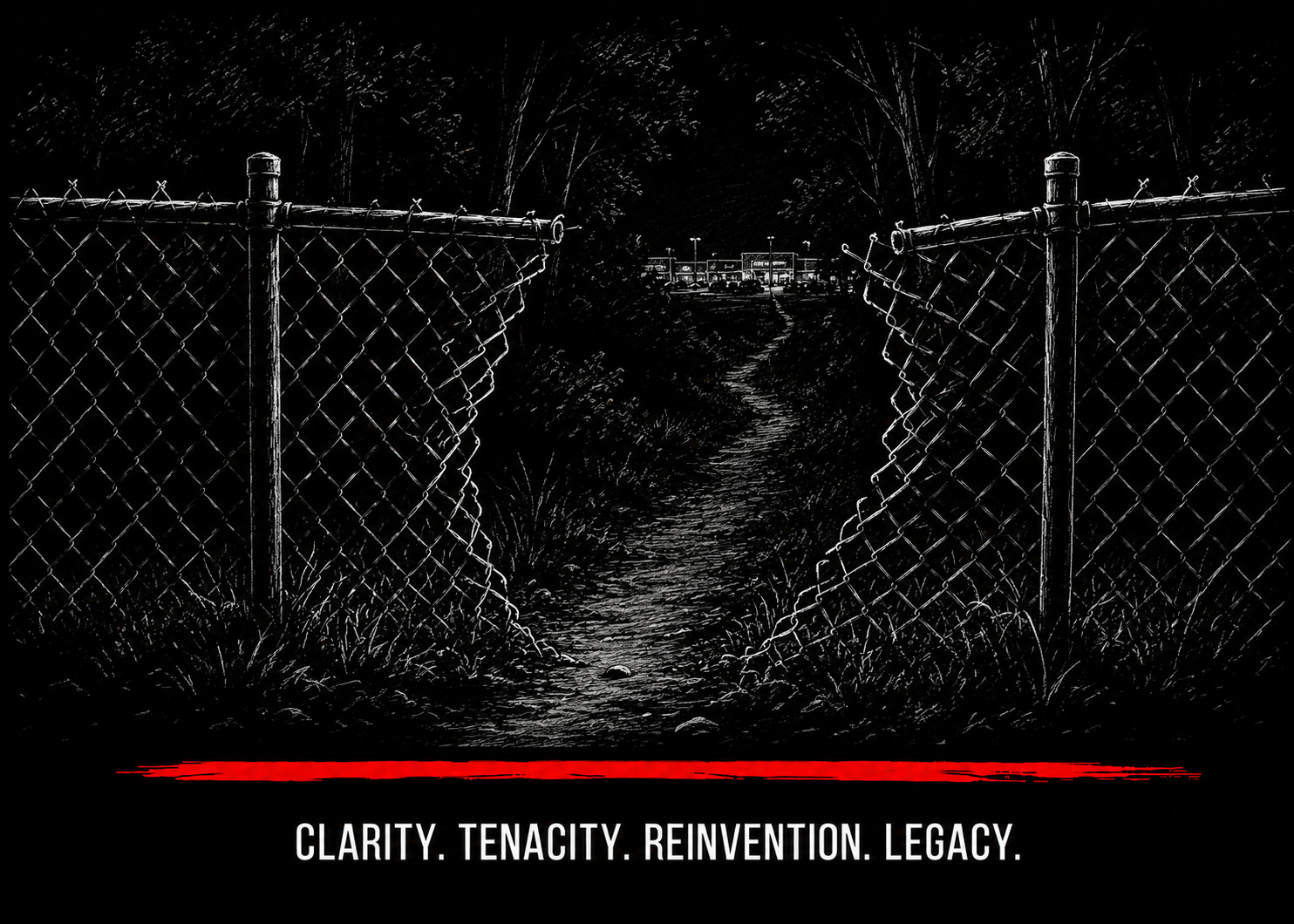
Back when I was a kid, the woods behind my parents’ house felt endless.
Not state park endless.
Kid endless.
There were trails everywhere from years of kids doing what we did. Freight train tracks ran parallel to the woods, and the trains rumbled through often enough that they became part of the landscape. We rode BMX bikes through those woods. We just called them dirt bikes.
You could go basically from my house all the way to a shopping center with an ice cream shop.
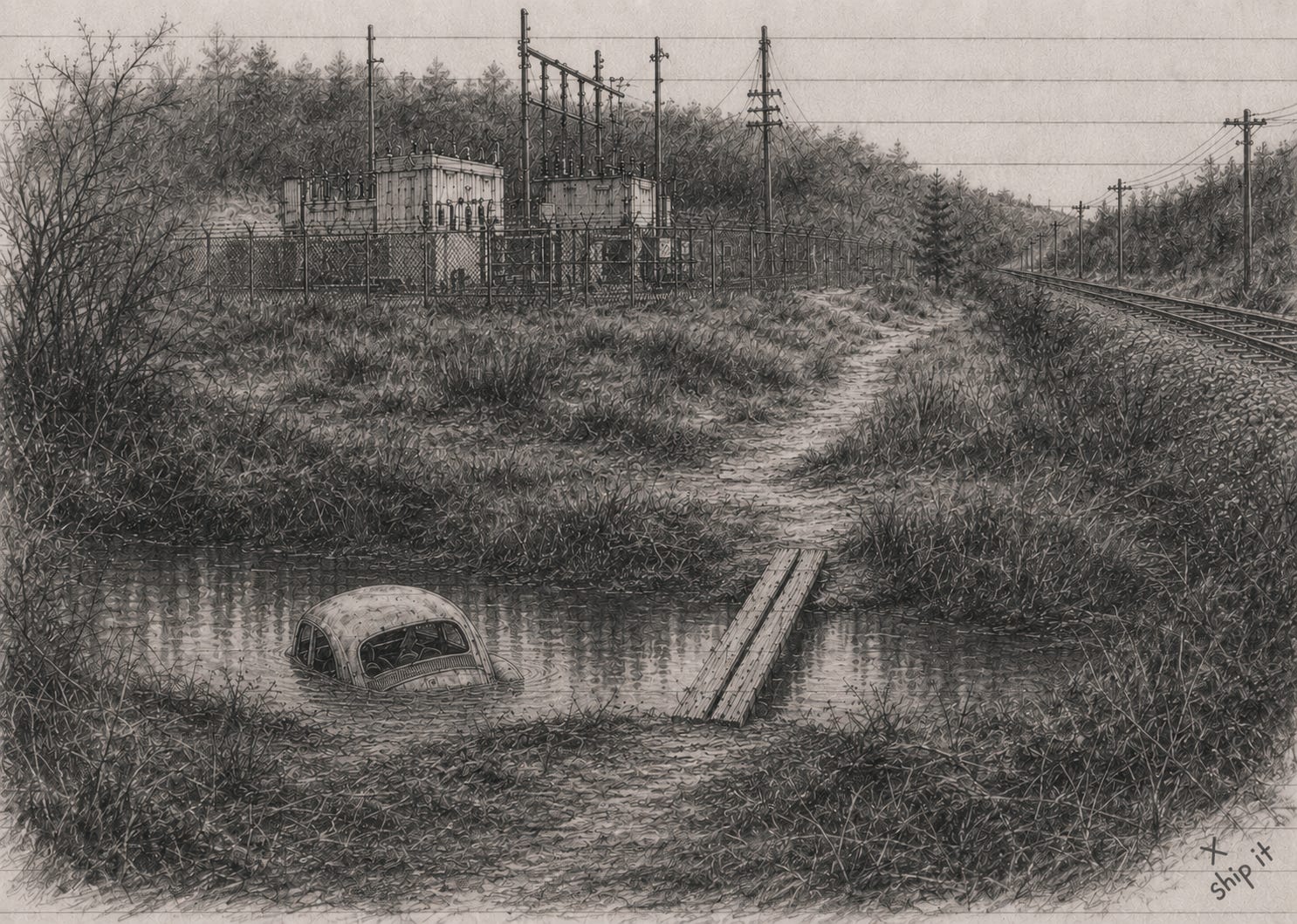
Along the way, you’d cross several streams and an electric power plant surrounded by a moat. Some kid had taken wood planks and built a removable bridge so you could cross over to the power plant side. The power plant itself was still protected by a tall fence topped with barbed wire, but we felt like we were doing something getting to the other side.
Once you passed the power plant, there were still endless trails all the way to the shopping center.
We weren’t trying to become independent.
We were trying to get to the ice cream shop.
Lunch Tickets and Ice Cream
My parents were already fully operating on counterculture beliefs before I was born. My dad was nine years older than my mom and considered himself more Bohemian than hippie. They both thought Woodstock commercialized everything.
By the time I came along, the operating system was already installed.
Vegetarian household. War on sugar. Whole grain everything. Distrust of commercials and consumer culture. Freedom over conformity.
Meanwhile, I was carrying peanut butter and jelly sandwiches on Roman Meal wheat bread while other kids had Wonder Bread and Twinkies.
At twelve, I wasn’t trying to be different.
I just was.
I can still taste that bread.
And not in a nostalgic way.
Sometimes my parents bought lunch tickets ahead of time for school lunches. Most of the time, I made my own lunch. But those lunch tickets had value. Some kids were always hungry. Bigger appetites. We would trade lunch tickets for quarters. Two quarters bought an ice cream cone.
So on Saturdays we would head through the woods toward the shopping center with quarters in our pockets, certain it was enough.
Walking or biking several miles through trails and streams, crossing over at the power plant just to get ice cream somehow felt completely normal.
We Had Access
The forts started because we needed somewhere to hide.
We built them out of construction debris people left at the curb. Scrap lumber, crooked nails, whatever we could drag back there. Several short two-by-fours nailed together became one long board. They didn’t look like much, but they provided enough shelter to hide in and call them ours.
One of my buddies had a dad who was a construction contractor, so we had easy access to tools.
To be clear, we did not have permission to use the tools.
We had access to the tools.
We collected pinecones in five-gallon buckets borrowed from construction sites. In the fall, after the trees lost their leaves, we’d give everybody a few minutes to hide.
There were endless ditches, leaf piles, trails, and hiding places all through those woods.
We weren’t the only ones back there.
The older teenagers used the woods too. We’d occasionally stumble onto them hanging out, drinking beer, smoking pot, doing whatever older teenagers did when nobody was watching.
Sometimes they’d chase us off.
Sometimes they’d just chase us.
One of the best spots was a giant pile of leaves. You’d bury yourself inside it with both hands full of pinecones and wait for one of your buddies to walk by.
Then you’d explode out of the leaves and nail the hell out of him.
We were always looking for the next bad idea.
After big rains, the moat around the power plant would fill up with water. We would take our bikes and launch ourselves off the edge into it.
At some point somebody had dumped an old Volkswagen Beetle into the moat. It sat there half submerged underwater, rusted out like something from another world.
Which meant you had to know exactly where to jump.
After big rains, we’d launch our bikes into the moat.
The trick was remembering where the submerged Volkswagen was.
What We Built in the Street
The woods weren’t the only laboratory.
One time we found a bunch of abandoned tires, which naturally led to us building bike ramps in the street in front of my house. Two tires and a sheet of plywood for the launch ramp. Another set several feet away for the landing ramp.
You had to be going really fast.
I hit the ramp, came up short on the landing, and got thrown off the bike hard enough to knock myself unconscious.
My friends told me later they were slapping me in the face trying to wake me up before eventually banging on a neighbor’s door for help.
Apparently I was okay because I didn’t go to the hospital.
When the Woods Started Shrinking
By my teenage years, parts of the woods had already started disappearing.
Developers were tearing down sections for condominiums and shopping centers.
Then more shopping centers.
Trails that once felt endless suddenly dead-ended into roads and construction sites.
Around the same time, music started taking over territory the woods used to occupy.
The map was changing.
So was I.
Of Course I Ended Up Here
A lot of the people I met in the punk scene already knew what it felt like to not quite fit in.
My parents had spent years raising us to distrust commercials, question consumer culture, ignore trends, and think independently.
Of course I ended up here.
That’s when I discovered Corrosion of Conformity. They were neighbors to our south out of Raleigh, North Carolina. DIY, local, independent, and always on the road. I probably saw them more than a dozen times over the years. Usually five bucks to get in. Three to four bands on the bill.
They started hardcore punk, then evolved into crossover metal with traces of Sabbath.
I would sit in my room blasting those albums loud enough to shake the walls while my mom banged on the door yelling at me to turn it down.
Then one day she started reading the lyrics.
She still couldn’t stand the music.
But she started respecting a lot of the underlying ideas.
Looking back, part of what drew me to that scene was familiar territory. A lot of the people I met there understood what it’s like to be a little out of step with the world.
The shows kept happening.
The woods kept shrinking.
The Strip That Survived
Somewhere in there, childhood ended faster than I expected.
My parents divorced.
I got married too young.
Got divorced.
When my mom decided to sell the house,
I bought it from her.
A few years later, I got married again.
We raised our kids here too.
I still live here today.
And behind my house, there’s still a surviving stretch of woods running back to the power plant.
Everything on the other side has mostly been developed now.
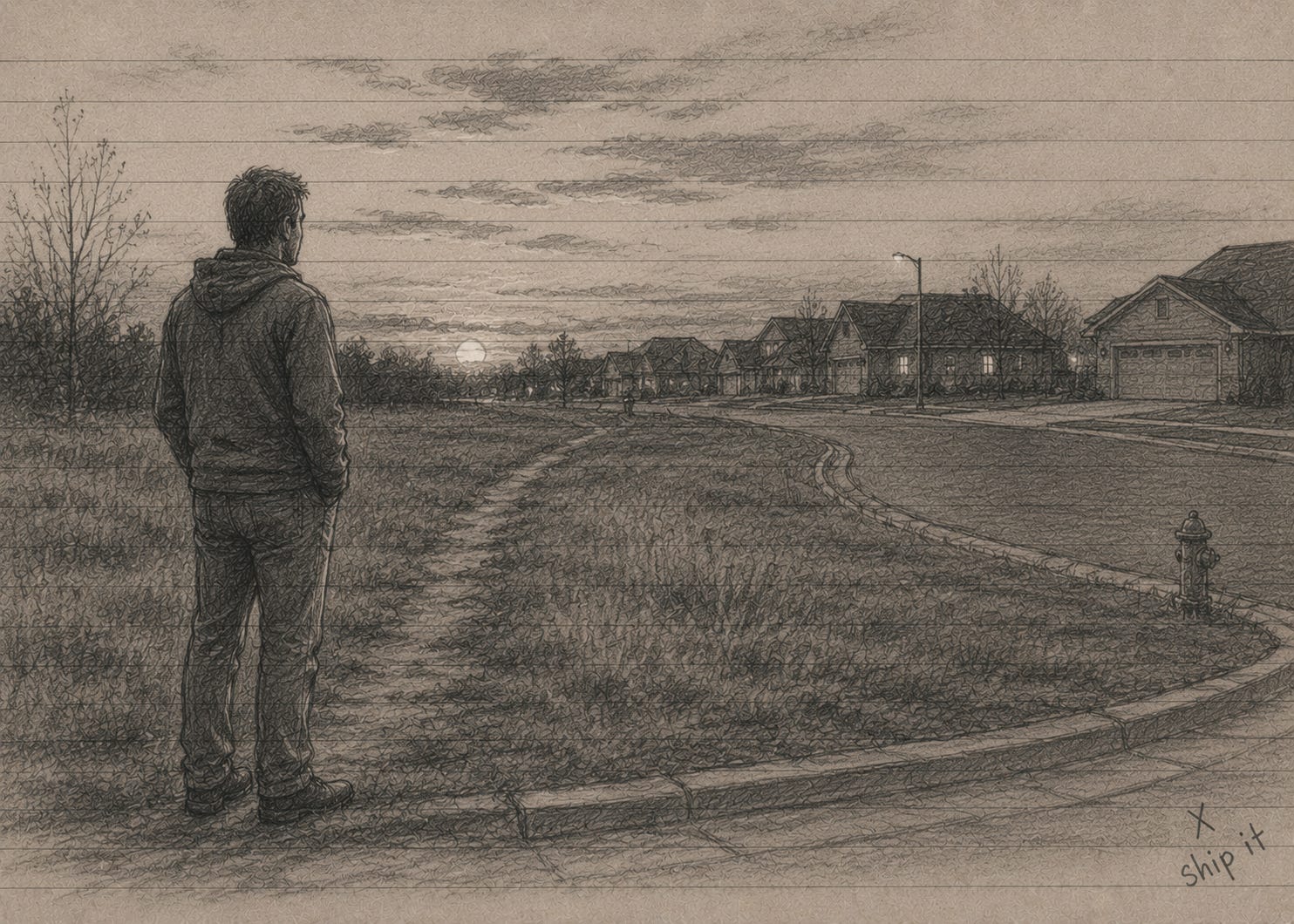
Looking back, I don’t think we were trying to become independent.
We were just trying to get ice cream.
Or build a fort.
Or find a way across a moat.
Or figure out where it was safe to jump without landing on a submerged Volkswagen.
Nobody called it self-reliance.
Nobody called it resilience.
Nobody called it reinvention.
It was just whatever problem was in front of us that day.
How do we get across?
How do we build this?
How do we get there?
How do we make this work?
I didn’t realize it at the time, but I spent most of my childhood learning how to figure things out without waiting for someone else to hand me a map.
It was never about the moat.
It was about learning how to cross whatever was in front of us.
What parts of you were built in places that no longer exist?
CTRL: R
If this was worth your time, three ways to say so.
Forward this to someone who figured things out the hard way too.
Tell me what parts of you were built before anyone was watching.
Inside the CTRL Vault, paid subscribers get the full version.
Deeper frameworks.
Thanks for reading.
~ JP
—
Related:
Nobody called it reinvention then either.

CTRL Signals by JP Bristol
Clarity. Tenacity. Reinvention. Legacy
You really wrote this in a way I was able to picture in my mind. And what a very Gen X generation response to being knocked unconscious…slap you till you wake up and not go to the hospital 😂. I’m in the older end the millennial spectrum, and a lot of these childhood dynamics were what I grew up with as well. And wholewheat bread trauma is real!
Love this, JP. Reminded me of shooting each other in the ass with BB guns, climbing small pine trees and seeing how many people it took to be able to pull them over, and the old railroad trestle by the creek that we used to jump out of a tree into what was probably water moccasin filled waters and not giving a shit.