


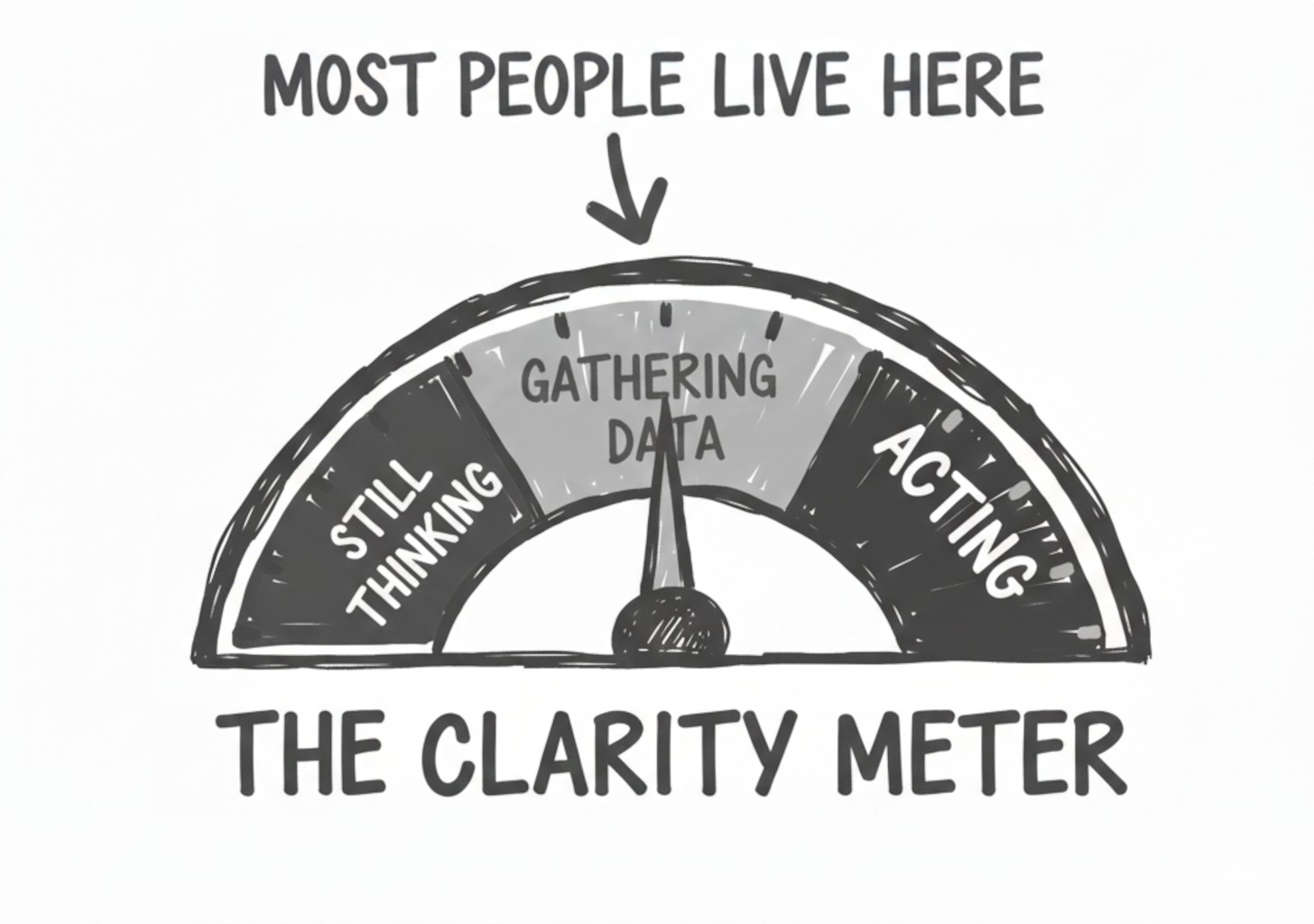
People say they’re stuck because they lack clarity.
They aren’t.
They’re stuck because clarity would force a decision they’re not ready to make.
So they keep looking.
• They read.
• They listen.
• They gather frameworks.
• They ask better questions.
All of it feels responsible.
All of it feels mature.
Most of it is avoidance.
I know because I’ve lived inside that stall.
There were stretches where I told myself I was “thinking things through.”
What I was really doing was protecting optionality.
Keeping exits open.
Delaying the moment where one door closes for good.
Clarity feels noble when you’re chasing it.
It feels dangerous when you realize it demands enforcement.
Because clarity doesn’t arrive with relief.
It arrives with consequences.
And consequences are expensive.
Most people don’t want clarity.
• Reassurance without commitment.
• Insight without obligation.
• Movement without loss.
That’s not clarity.
That’s shopping for comfort.
Clarity shows up only after something gets cut.
Not considered.
Not explored.
Cut.
The reason people stay confused longer than necessary is simple.
Confusion is reversible.
Decisions aren’t.
As long as you’re “still thinking,” you haven’t failed.
You haven’t chosen wrong.
You haven’t disappointed anyone.
You haven’t exposed yourself to regret.
You’re safe.
But you’re also stuck.
At some point, the search for clarity becomes a place to hide.
A clean, socially acceptable excuse for not enforcing what you already know.
Because most adults don’t lack information.
They lack the willingness to live with the cost of acting on it.
You can feel that moment when it shows up.
It’s not loud.
It’s heavy.
It’s the moment when the question stops being “What should I do?”
and becomes “What am I willing to give up?”
That’s where clarity actually lives.
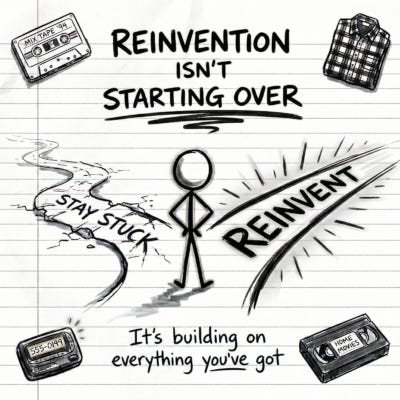
This is the moment people call “lack of clarity.”
It isn’t.
It’s the last moment before enforcement.
The left path isn’t failure.
It’s familiarity.
Routine.
Identity that still works well enough to justify staying.
The right path isn’t courage.
It’s cost.
• Loss of status.
• Loss of certainty.
• Loss of the version of you that knew how to operate the room.
Standing there isn’t confusion.
It’s calculation of cost.
And the reason people linger is because both paths charge a price.
One charges it slowly.
The other charges it upfront.
So people wait.
They stand still and call it prudence.
But clarity doesn’t come from standing at the fork longer.
It comes from stepping onto one path and accepting what it demands.
That’s what enforcement looks like.
Clarity doesn’t feel clean in the moment.
It feels restrictive.
Narrow.
Final.
That’s why people avoid it.
Because once clarity is enforced, excuses die.
So do narratives.
So does the fantasy that everything can be kept.
When you enforce clarity, something ends.
• A role.
• A relationship.
• A belief about who you are allowed to be.
That ending is what gives clarity weight.
Without that cost, it’s just a thought experiment.
I’ve learned this the hard way.
Every real shift in my life came after I stopped pretending I needed more insight.
I didn’t.
I needed the nerve to live with what the insight already required.
The delay wasn’t intellectual.
It was emotional resistance.
I wasn’t preparing.
I was postponing the decision.
Eventually, clarity stops waiting.
It starts charging interest.
• Time.
• Energy.
• Self-trust.
That’s the bill no one talks about.
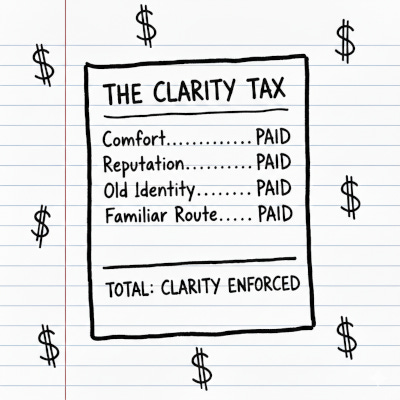
Waiting protects comfort.
It protects reputation.
It protects the illusion that you’re still in control.
But it costs momentum.
It costs honesty.
It costs the quiet confidence that comes from knowing you chose, even if it hurt.
That cost adds up.
The longer you delay enforcement, the more clarity feels unreachable.
Not because it’s gone.
But because acting on it now would require admitting how long you avoided it.
That’s a heavier price than most people are willing to pay.
So they stay “uncertain.”
Here’s the part no one says out loud.
Clarity will make you unpopular with parts of your old world.
It will confuse people who benefited from your indecision.
It will make you look abrupt to those who preferred you flexible.
That’s the tax.
And it’s why clarity can’t be found in books, podcasts, or conversations.
It can only be enforced in behavior.
When you stop doing the thing you said you’d “revisit.”
When you say no without a long explanation.
When you remove an option instead of debating it again.
Those actions don’t feel insightful.
They feel risky.
That’s how you know they’re real.
The irony is that once clarity is enforced, it often feels obvious in hindsight.
People will tell you they always knew you’d end up there.
They didn’t.
You didn’t either.
You chose.
That’s what made it true.
If you’re waiting for clarity right now, ask yourself a better question.
What decision am I postponing because once I make it, pretending is over?
What am I calling confusion that is really unwillingness to pay the cost?
Clarity isn’t missing.
It’s waiting on enforcement.
And enforcement doesn’t ask for certainty.
It asks for ownership.
So the question isn’t whether clarity will come.
It’s whether you’re willing to live with what it requires when it does.
—
Thanks for reading.
~ JP
CTRL:C
CTRL Signals by JP Bristol
Clarity. Tenacity. Reinvention. Legacy.
Yeah, you’re really exposing the secrets of expert procrastinators: the illusion of productivity while doing nothing. I’ve been advising entrepreneurs for some years now, and I always tell them it’s better to just start. You learn as you go, your idea will evolve, and you simply can’t think your way into that kind of experience.
Hey, JP. This really resonated with me.
I’ve been working with women who say they’re “stuck,” or overwhelmed by ideas. Your point about clarity versus enforcement really landed. In many cases, the writing isn’t the problem at all. The decision underneath the writing is.
Excellent article. Thanks for putting words to something so many people experience.