


Nobody told Clark Griswold the Wagon Queen Family Truckster was coming.
He drove his 1970 Oldsmobile Vista Cruiser to the lot. Had a plan. Knew what he wanted. Signed the paperwork on the Antarctic Blue Super Sports Wagon while the salesman smiled and nodded.
By the time he got to the parking lot, his trade-in was already crushed.
Metallic pea. Fixed rear windows. Vinyl wood paneling.
No rollback. No comparison. Just the gap between what was promised and what was sitting in front of him.
I lived that scene. Not in a movie. In a conference room in 2020 with everyone in face masks trying to hold normal together with whatever was available.
David
We needed a new IP phone system.
We did the work first. Built a detailed RFP. Wrote a thorough SOW. Documented exactly what our operation required before anyone walked through the door.
The vendor sent two people.
The salesperson. And a man I will call David.
David was the Sales Engineer. The technical closer. The one who came prepared to answer the hard questions.
We did not hand David our requirements on paper and wait for his response.
We showed him how our existing system worked. Walked him through it live. Demonstrated every function we relied on daily. Door access. PA system controls. The interval reminder that told us someone had been on hold too long.
Basic operational functionality we had relied on for years.
David watched all of it.
Then David checked every box.
Every requirement we had documented, David had a response for. Every concern we raised, David addressed directly. He looked us in the eye, masks and all, and told us the system would exceed our expectations.
There is an old saying in enterprise technology.
Nobody ever got fired for buying IBM.
It does not mean IBM was always the best choice. It means the name carried enough institutional weight that the decision felt safe. Defensible. Above scrutiny.
We were not buying IBM. But we were buying the same thing the saying describes. A reputable, nationally known company. The kind of name that signals you did your homework. The kind that makes the decision feel airtight before the product is ever examined.
We had done everything right.
We signed.
The Parking Lot
The gaps showed up fast.
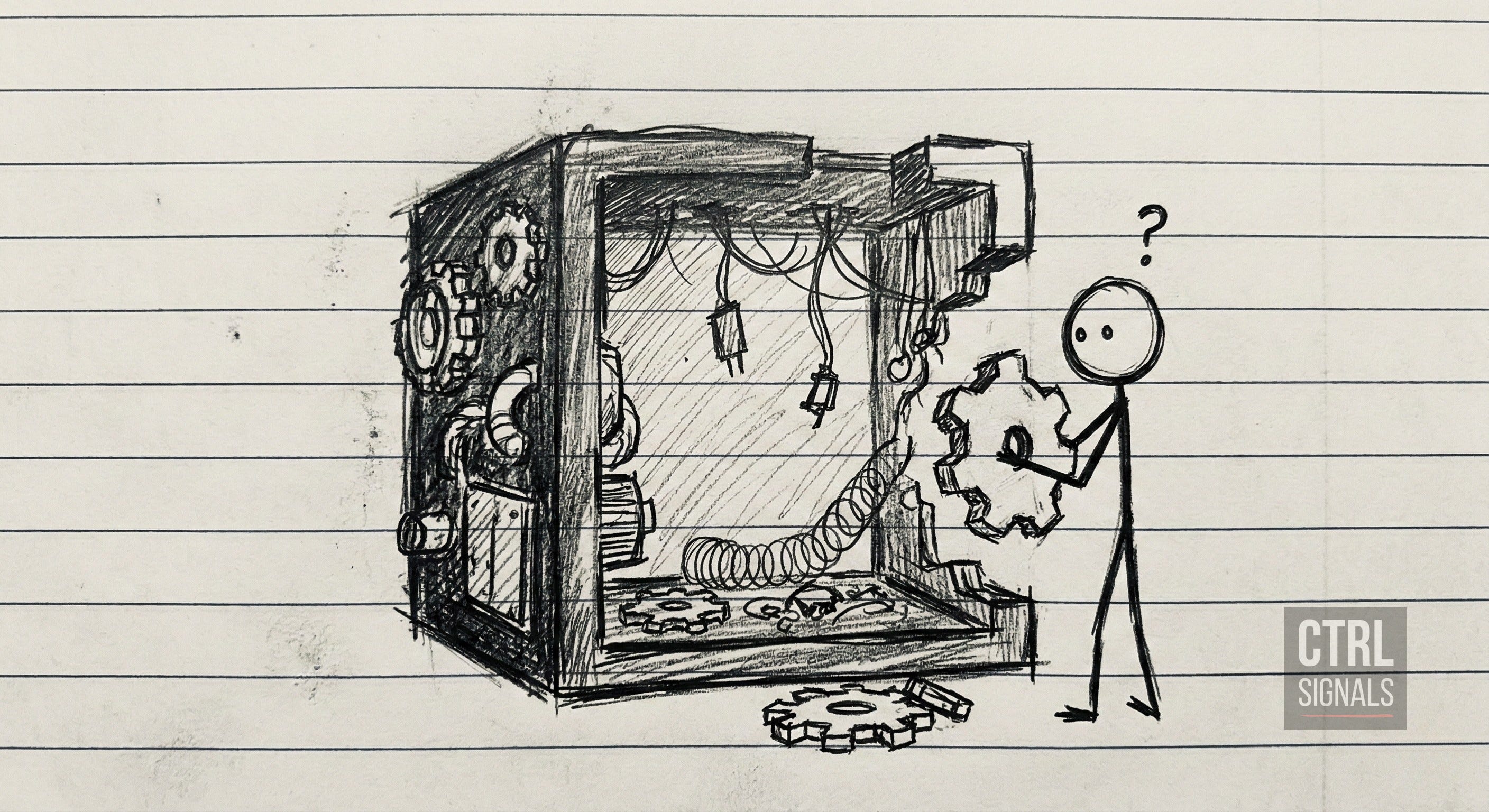
Door access. PA system controls. The hold reminder. The operational basics David had watched us demonstrate on our existing system.
Gone.
The open source access we needed to configure the system for our operation was not available the way we required it. Not something we had failed to ask about. Something never surfaced despite a live demonstration of exactly what we needed it to do.
So we bought third party hardware to bridge the gaps. Additional cost. Additional complexity. Additional work to get back to functionality we already had.
And here is the part that sealed it.
By the time we understood the full extent of what was missing, our old system was already gone.
Ripped out.
No rollback. No comparison.
No way to measure what we had lost against what we were promised because the thing we had lost had already been crushed in the parking lot.
We did not get a transformation.
We got a Wagon Queen Family Truckster in metallic pea and a workaround stack.
David was long gone.
What David Actually Sold
I am not indicting David.
David did what sales organizations train people to do. Close the deal. Hit the number. Move to the next prospect. His job ended at the signature. Ours started there.
That is not dishonesty. It is misaligned incentives.
He was never going to be the one configuring the system at midnight. He was never going to be the one buying third party hardware to bridge the gaps. He was never going to live inside the distance between the demo and the deployment.
So he never had to care about it.
The reinvention industry is built the same way.
The pitch is clean. The before-and-after is compelling. The testimonials come from people who made it through and can now sell the view from the other side.
What you do not see in the pitch is the workaround stack.
The third party hardware.
The gap between what was promised and what the system actually requires once you are inside it.
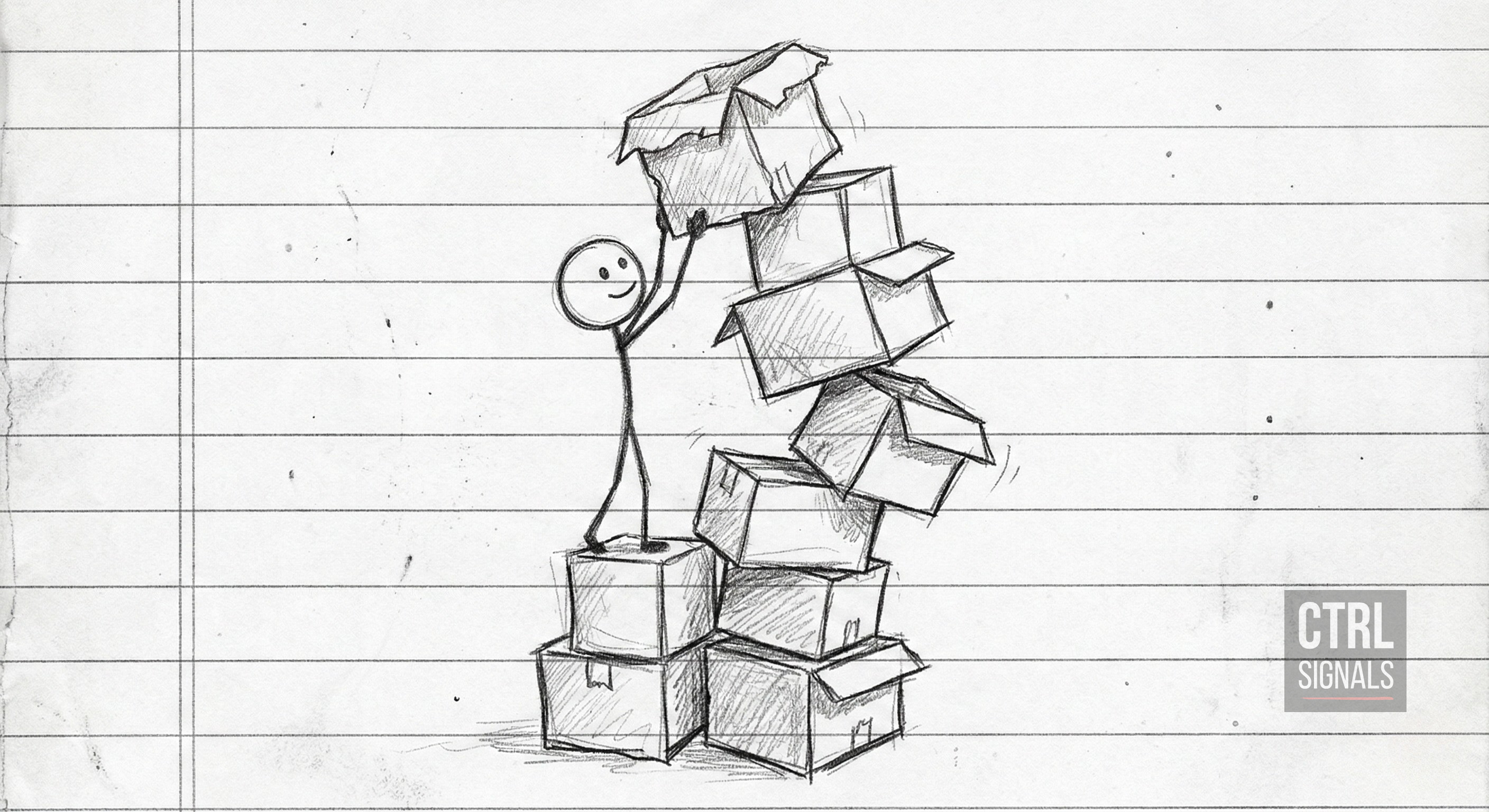
Because maintenance does not make a good course title.
So most people find a better one.
I stopped looking for a better one.
What I Have Learned to Look For
After David, I changed how I evaluate anything that promises transformation.
I stop listening to what it says it will do.
I start asking what happens when it does not work the way the pitch said it would.
What is the access like.
What can I actually modify.
What breaks first and how do I fix it without calling David again.
Because transformation language assumes a destination. A point at which the work is done and you have arrived at the version of yourself the pitch promised.
Maintenance language assumes motion.
An ongoing process with no arrival point. A commitment to showing up before the breakdown, not after. Access to the code. The ability to get under the hood and keep the thing running the way your operation actually requires.
Those are different contracts. One of them closes deals. One of them actually works.
The Honest Version
I have been building CTRL-ALT-REINVENT while holding down a full-time VP role.
I have not transformed.
I have maintained.
Wake up early and write before the day has opinions about my time.
Publish before the fear gets organized.
Show up to the community before I feel like I have something worth saying.
Fix what is squeaking. Replace what is worn. Keep it running.
Some weeks that looks like momentum.
Some weeks it looks like a guy staring at a blank document at five in the morning wondering if any of this compounds.
It does.
Not because I found the transformation.
Because I stopped waiting for it and started doing the maintenance instead.
That is not a course title.
That is the work.
This Isn’t Failure
If you are in the middle of a career transition, a platform build, a second act you cannot fully name yet, you have probably met your version of David.
The framework that promised clarity and delivered complexity.
The system that checked every box in the demo and showed its gaps on day one.
The pivot that was supposed to feel like a beginning and landed more like a workaround.
That is not failure.
That is maintenance revealing itself.
The gap between the pitch and the reality is not a sign that reinvention is a lie.
It is a sign that reinvention is not a destination.
It is an operating system.
One that requires access to the code, the willingness to build workarounds when the base system falls short, and the discipline to keep running before anyone notices the breakdown.
David is not the problem.
Expecting David to tell you the whole story is the problem.
His incentives never required it.
The Slope
David did not invent this.
He just perfected the version that works on people who do their homework.
You built the RFP. You wrote the SOW. You showed him exactly how your system worked.
And you still ended up in the parking lot.
Because the pitch was not designed to survive contact with reality.
It was designed to survive the sales cycle.
Those are different things.
Reinvention courses are built the same way.
Designed to close. Not to run.
The gap shows up after you sign. After the old system is gone. After the trade-in is crushed and there is no going back to compare.
That is when you find out what you actually bought.
Access to the code.
Or a workaround stack and a number for David that goes straight to voicemail.
You already know which one you need.
The question is whether you are evaluating what you are buying before the parking lot. Or after.
What are you waiting for David to tell you that you already know?
CTRL is not a transformation product.
It is maintenance access.
—
Thanks for reading.
~ JP
CTRL:C
Related:

CTRL Signals by JP Bristol
Clarity. Tenacity. Reinvention. Legacy
As I read about David it brought to mind my experiences both as the creator of the RFP and the David who was responding with a 'deal of a lifetime'. What I discovered was the sales side has no time to understand the 'maintenance ' factor. Sales is about numbers not results for the customer. This taught me a life lesson which informs everything I've done over the last decade to not just 'sell' the 'Wagon Queen' but also the maintenance plan as a package deal.
Yes, transformation looks and sounds great at first, however, it loses its shine quickly as the work starts and the person realizes that to make the transformation, you have to perform maintenance to keep the new thing running.
Like a car, shiny, new, and then maintenance to keep it running.
Like I want to sleep better, lose weight, communicate better, find time.
All doable, however, at what cost to perform the maintenance?
Old systems are hard to change and easier to maintain because its easy to stay with the existing old system because its less maintenance for the person.
Support is crucial to maintain a new system.